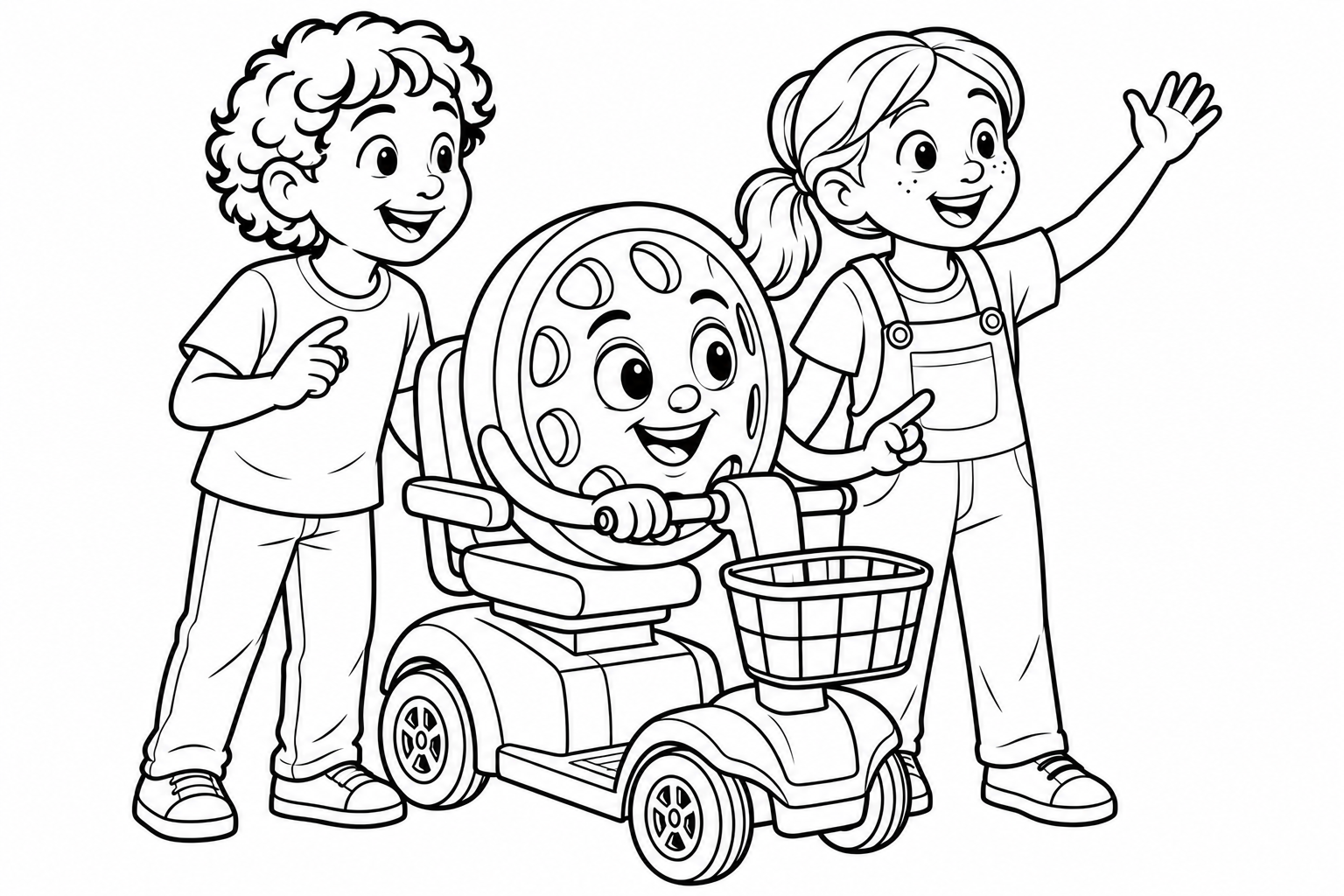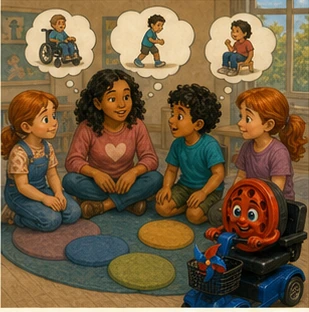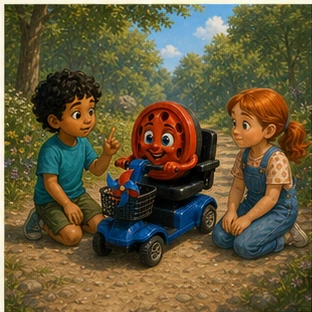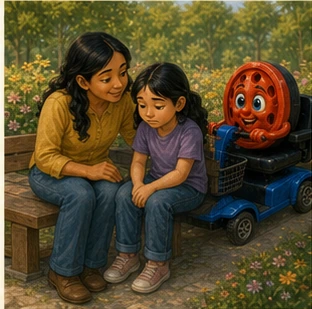
Ask Before Helping: Five Sentences Children Can Practice
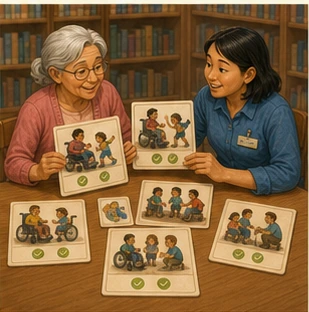
A five-minute practice that teaches children to offer help, wait for an answer, and follow the other person's direction.
Read the articleFor families, teachers and librarians
Practical activities, read-aloud questions and stories that help children talk about feelings, respectful help, disability, access and inclusion.
Start with the first activity
For home, school and storytime
Choose what matters today: asking before helping, emotional regulation, belonging, disability representation, accessible outings or teamwork.

A five-minute practice that teaches children to offer help, wait for an answer, and follow the other person's direction.
Read the article
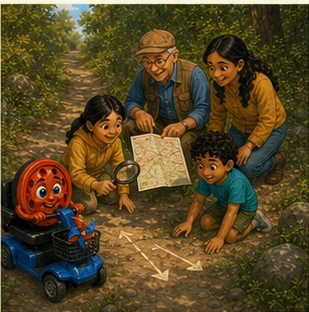
A child-friendly way to investigate a route before an outing and replace vague promises with useful information.
Read the article
How to recognize a story that gives disabled characters agency, ordinary joy, and a life beyond teaching others a lesson.
Read the article
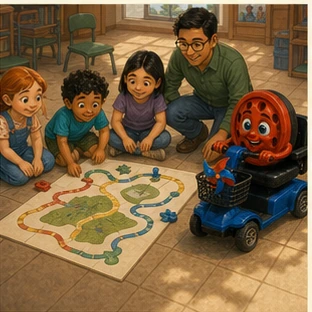
A cooperative floor activity that makes equitable participation visible without simulating anyone's disability.
Read the article
An honest, hopeful response that acknowledges the barrier without measuring the child's life against someone else's route.
Read the article
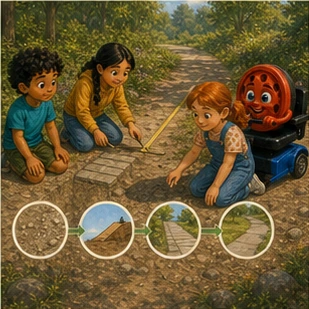
Five concrete features children can observe: surface, width, slope, edges, and trustworthy information.
Read the article
Questions that keep the character's goal and agency at the center of a classroom or family conversation.
Read the article
How books can portray scooters, wheelchairs, walkers, and canes as ordinary tools within a full and joyful life.
Read the article
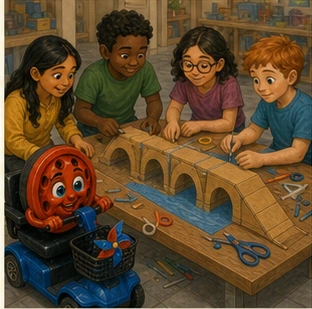
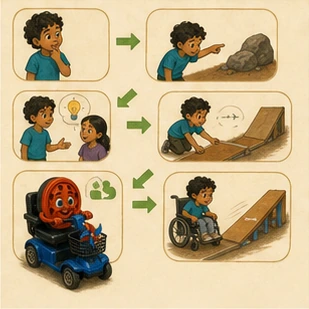
A build-test-revise activity that connects engineering with safety, user knowledge, and shared participation.
Read the article
A five-part routine that helps children respond to a barrier without rushing to fix the person.
Read the article
How to honor a child's need for information and turn preparation into agency rather than a demand to be more spontaneous.
Read the article
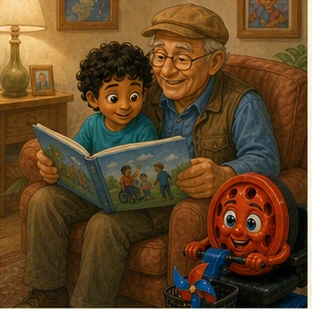
A warm intergenerational reading ritual built around one picture, one honest question, and one family memory.
Read the article
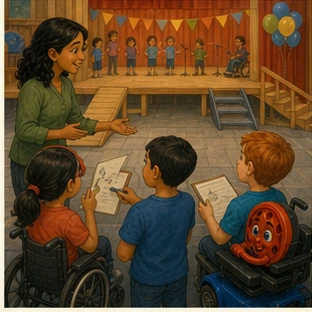
A practical review of routes, stages, seating, information, roles, and backup plans before a class celebration or school event.
Read the article
Simple language for answering children's questions, protecting privacy, and keeping the disabled character at the center of their own story.
Read the article
A practical curation guide for families, teachers, and librarians who want disability representation across everyday stories.
Read the article