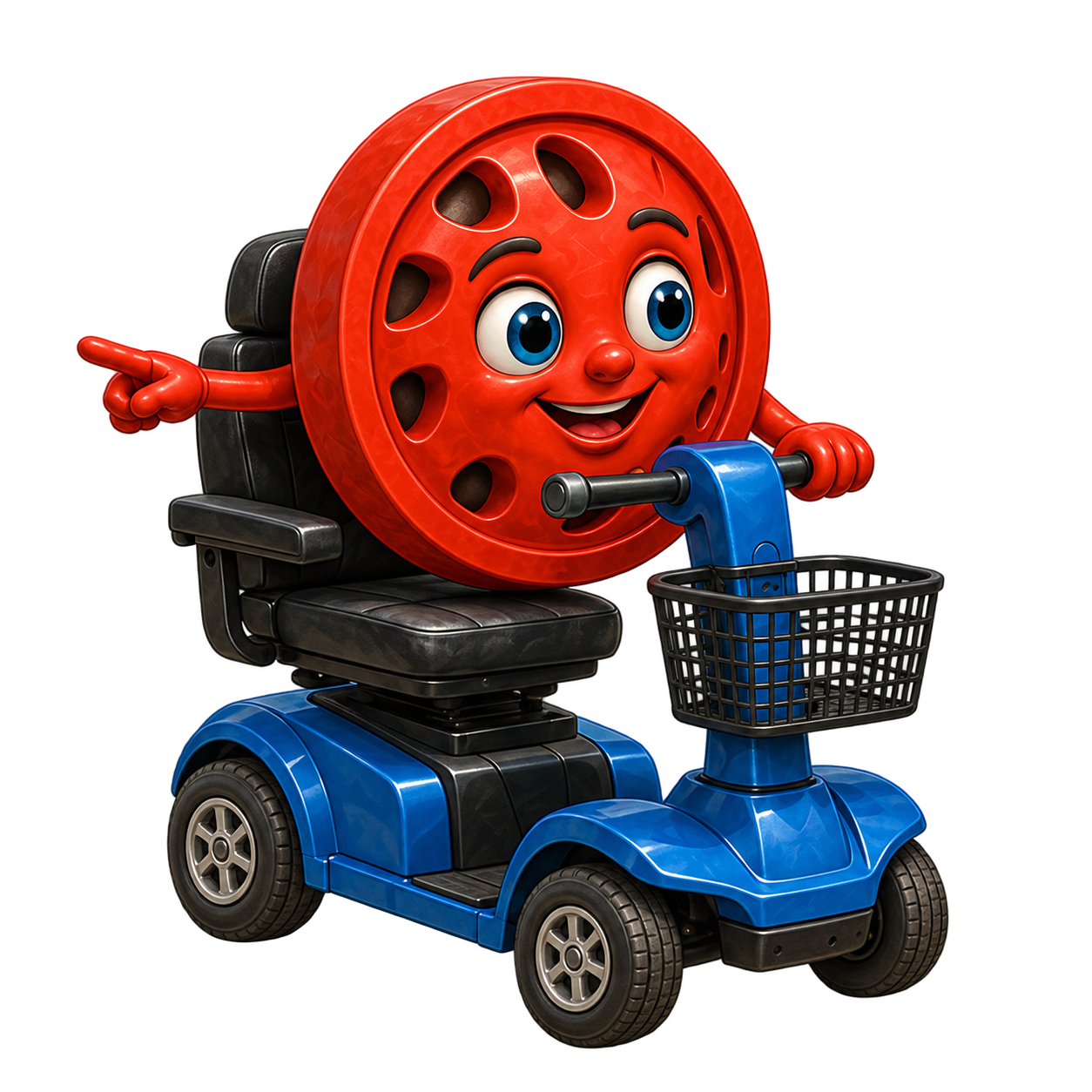
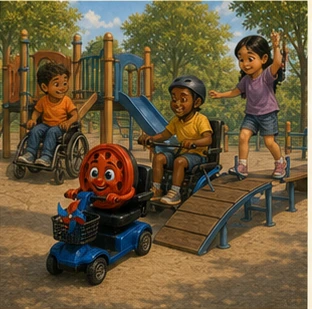
Every adventure starts with something we want to do. Before offering a solution, give the child room to name a goal, offer an idea and choose a step. These questions and activities connect Willy’s active role in his adventure with the small decisions children make in everyday life.
A mobility device does not have to announce a tragic lesson each time it appears in a picture book. It can be present while a child chases a mystery, disagrees with a friend, chooses a snack, explores a path, or laughs at a joke.
That everyday presence matters. Disabled children see themselves inside childhood, while other children learn that a scooter or wheelchair is a tool and part of someone's personal space, not a symbol that tells the whole story.
Show what the tool enables
A useful description connects the device to action: the scooter carries Willy farther, the wheelchair provides mobility, the cane offers information and support. Avoid language that turns the person into a prisoner of the device.
The tool does not replace the character's personality. Curiosity, impatience, humor, and choice remain visible.
Respect personal space
Characters should not lean on, move, race, decorate, or use another person's mobility device without permission. Help begins with a question and follows the user's instructions.
Speak to the person, not only to a companion. If the story consistently addresses adults over the child's head, notice what that teaches the reader.
Let disability be relevant but not total
A route barrier can be an important plot point without becoming the only thing we know about Willy. The story can care about access and still be about wind, friendship, planning, disappointment, and a festival.
After reading, ask children what the character did and wanted before asking what device they used. The order of attention shapes the memory they carry.
Frequently asked questions
What is a mobility device?
A mobility device is a tool that supports movement, balance or access. Examples include wheelchairs, mobility scooters, walkers and canes.
What language should a children's book avoid?
Avoid describing a person as confined to or trapped in a wheelchair. Describe what the device enables and keep the person's choices and personality visible.
Can a mobility device be touched or moved to help?
Only with the user's permission. A mobility device is part of personal space, and respectful help begins with a question.
What does the mobility device make possible inside this particular adventure?