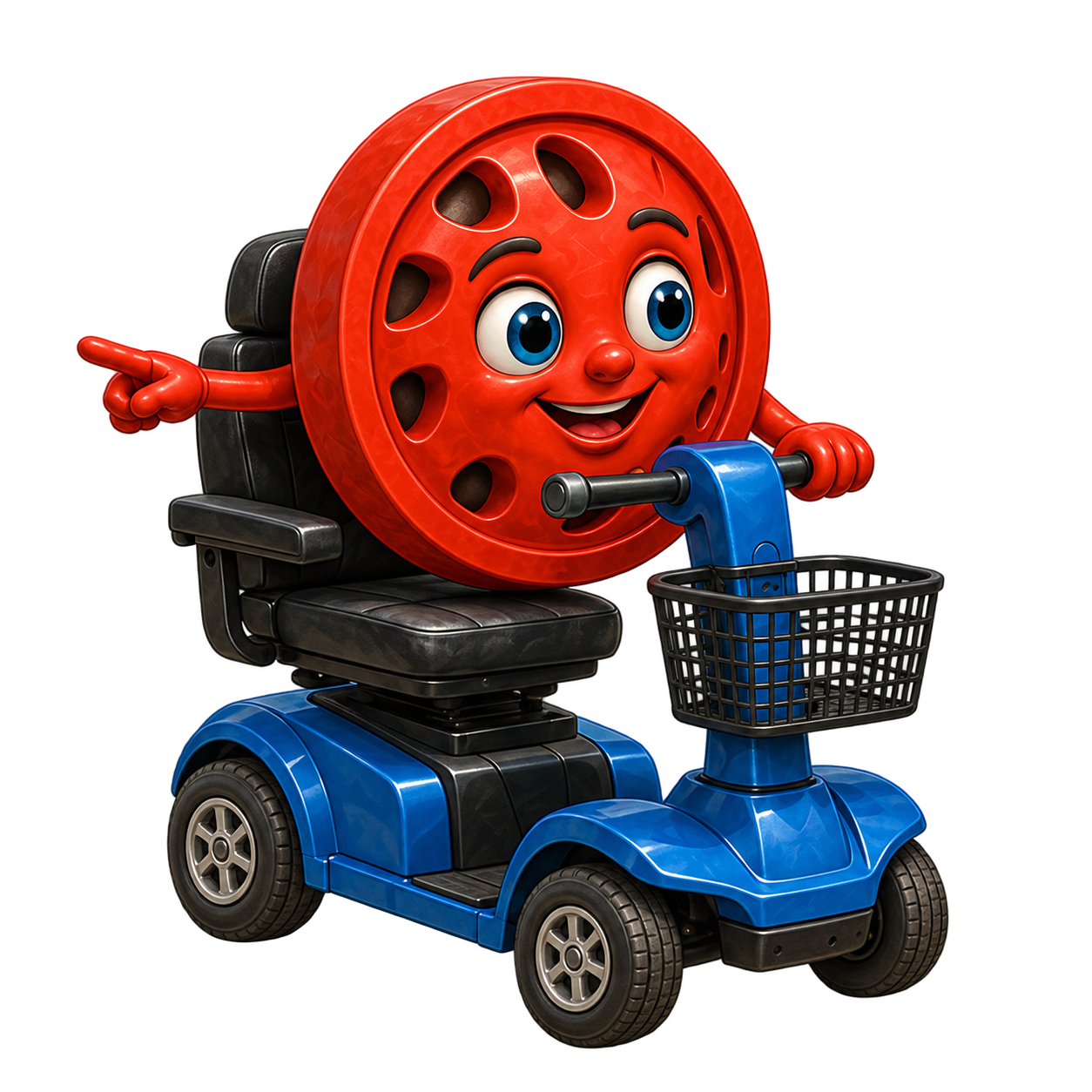
Every adventure starts with something we want to do. Before offering a solution, give the child room to name a goal, offer an idea and choose a step. These questions and activities connect Willy’s active role in his adventure with the small decisions children make in everyday life.
A path can look lovely in a photograph and still fail the person arriving with a scooter, wheelchair, stroller, or balance difficulty. Accessibility is not a decorative label. It is whether someone can arrive, move, turn, pause, continue, and return with safety and dignity.
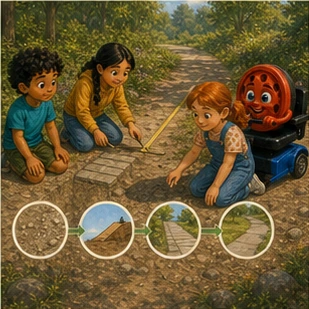
Children become careful observers when the investigation is concrete. This field guide teaches useful questions without asking them to judge another person's body.
Five features to observe
Look at the surface: is it firm or loose, dry or likely to sink? Check width and turning room. Notice steps, sudden slopes, drop-offs, and places to rest. Finally, ask when the information was last verified.
Children can make icons for each feature. A wheel for surface, two arrows for width, a triangle for slope, a border line for edges, and an eye for current information.
Inspect the path, not the person
Say the distinction aloud: we are not testing whether Willy is capable enough. We are testing whether the route was designed and maintained so he can use it.
When a barrier appears, describe it without blame: loose gravel, a fallen branch, a lip at the entrance, or a missing detail. Accurate description points toward repair.
Access can change overnight
Rain, construction, soft ground, parked objects, or a broken edge can change a route that worked last month. Maintenance is part of accessibility, and so is updating the public information.
Invite children to report both barriers and what worked well. They learn that access is a shared practice of noticing, listening, fixing, and checking again.
Which detail would you need to know before choosing this path?