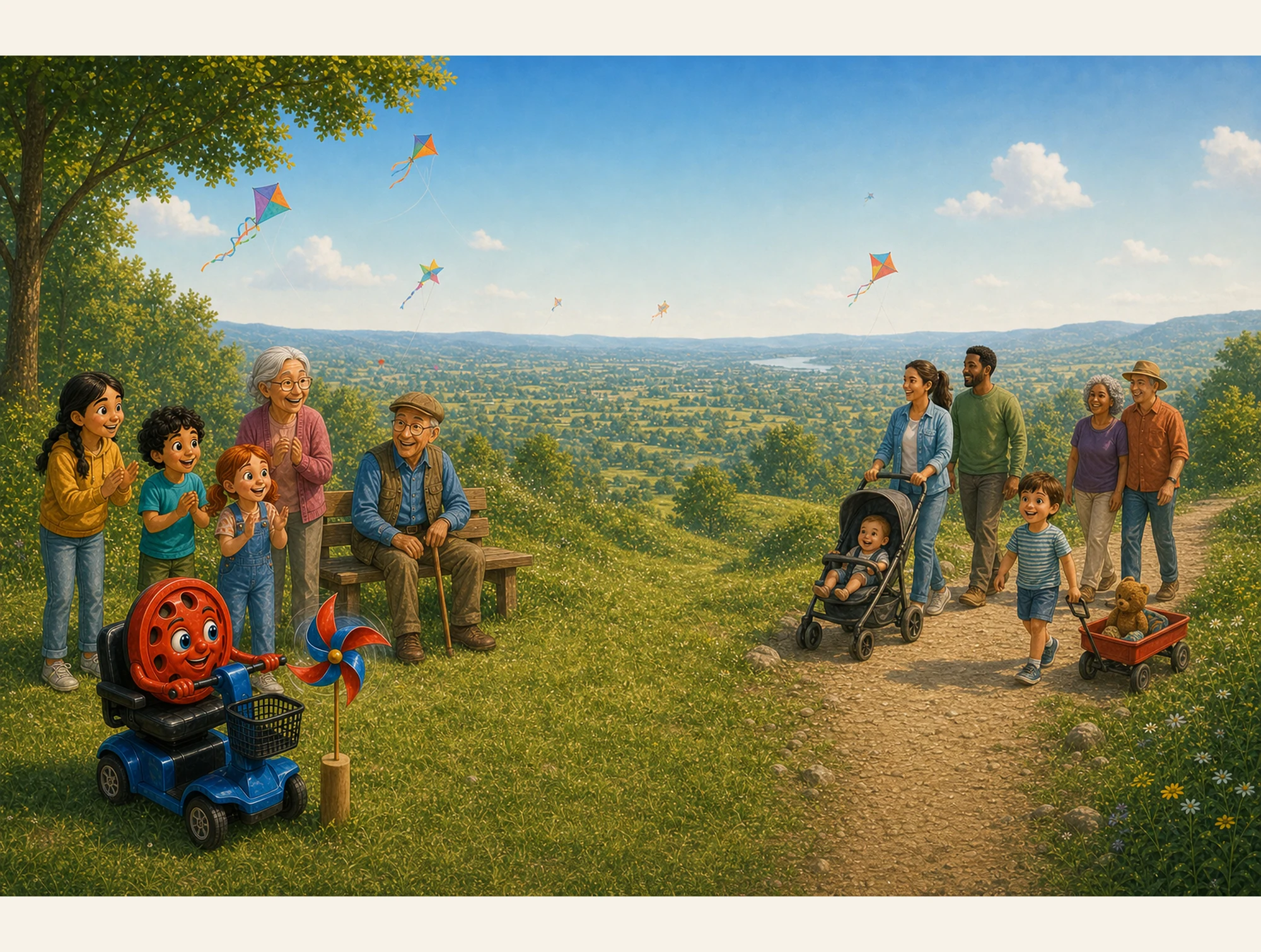
When grandparents look for a gift, they may also be looking for a chance to hear a child’s ideas. A shared adventure story can open that conversation. Independent thinking does not have to begin with a worksheet or a race to find the correct answer. It can begin with a child deciding what they would like to try.
Willy has a goal of his own: getting to the Wind Festival. When the path changes, he remains part of the planning and decisions. Pause at an illustration and ask your grandchild what they would want to check. Their answer can start a conversation even when it is different from the idea you had in mind.
Leave time for the first idea
After asking a question, leave a little quiet space. A child might study the picture, point to a detail or say they are still thinking. Try “What did you notice?” rather than repeating the question more loudly or immediately offering a clue.
When an idea arrives, be curious about the reason. Ask what made them choose it. Describe the detail they spotted or the plan they suggested. This keeps the conversation about their thinking rather than about guessing which answer will please a grown-up.
Offer two choices and room for another
Start with a manageable choice: a game or coloring, a character or a cover, red or blue. Two clear options can be easier to approach than a very broad question. The choice should have a result the child can see.
If your grandchild suggests something else, consider it together. Perhaps they want to color only the background first. They can act on that decision immediately. Independence is about having a meaningful say, not about facing the largest possible menu.
Listen to the game question together
Willy’s game plays a question after the child starts, then offers feedback on their answer. Sit nearby and listen together. There is no need to click for them simply to finish all the quests.
Ask which part of the picture helped them choose. If they want another attempt, let them decide whether to hear the question again or inspect the picture. Spoken questions offer another way to join in when independent reading still takes effort.
Take the adventure off the screen
Draw a destination and two possible routes on paper. Your grandchild can decide where to put a bridge, where to pause or which material to try. Ask about their plan and test it together without requiring it to work perfectly.
Building blocks offer another option. If a structure falls, ask which part they want to change. A drawing of the idea can be a satisfying ending, even if construction is unfinished. A shared activity does not have to end with a flawless solution.
Choose a gift that leaves room for next time
An adventure picture book can begin a small tradition: read a little, choose a question and follow an activity the child suggests. Willy’s book is sold separately; the website game and coloring pages are free. Add a personal note about an idea you enjoyed hearing.
One book does not promise a measurable change in thinking. It can give you a shared world to talk and play in. Adapt the questions and length of your visit to the child, and let them have a say in when to pause.
Frequently asked questions
What ages are these ideas for?
The book and activities are intended for ages 4-8. Adapt the question, support and session length to the child.
Does the activity guarantee improved skills?
These are opportunities for play and practice with choices. Their effect on a particular skill has not been measured in a study.
Which step would you like to choose yourself?