Children often rush toward someone who appears to be struggling. The impulse can be kind, but help that arrives without permission can startle someone, move a mobility device unsafely, or take away a choice the person was already making.
The lesson is not “never help.” It is that useful help begins with attention, a question, and enough silence for a real answer. These five sentences turn that principle into a short practice for home or class.
The five-sentence sequence
Practice: “I noticed something might be difficult here.” “Would you like help?” “What kind of help would work?” “Okay, I’ll wait.” “Thanks for telling me.” Children do not need to diagnose the situation or guess what a body can do.
Make room for “No, thank you.” Respecting a no is not a failed attempt at kindness. It is a successful act of respect.
Turn it into role-play
One person carries a box, guides a toy with wheels, or reaches a closed door. The second person notices, asks, and waits. The first person chooses: no help; please hold the door; or please move only the light object. Then switch roles.
Include a round in which no help is needed. This matters because children learn that appearance does not tell the whole story and that independence can look different from person to person.
Keep the person in charge
If help is accepted, follow the request exactly. Do not add a push, pull, lift, or touch “just to be safe.” Mobility devices are part of a person's personal space.
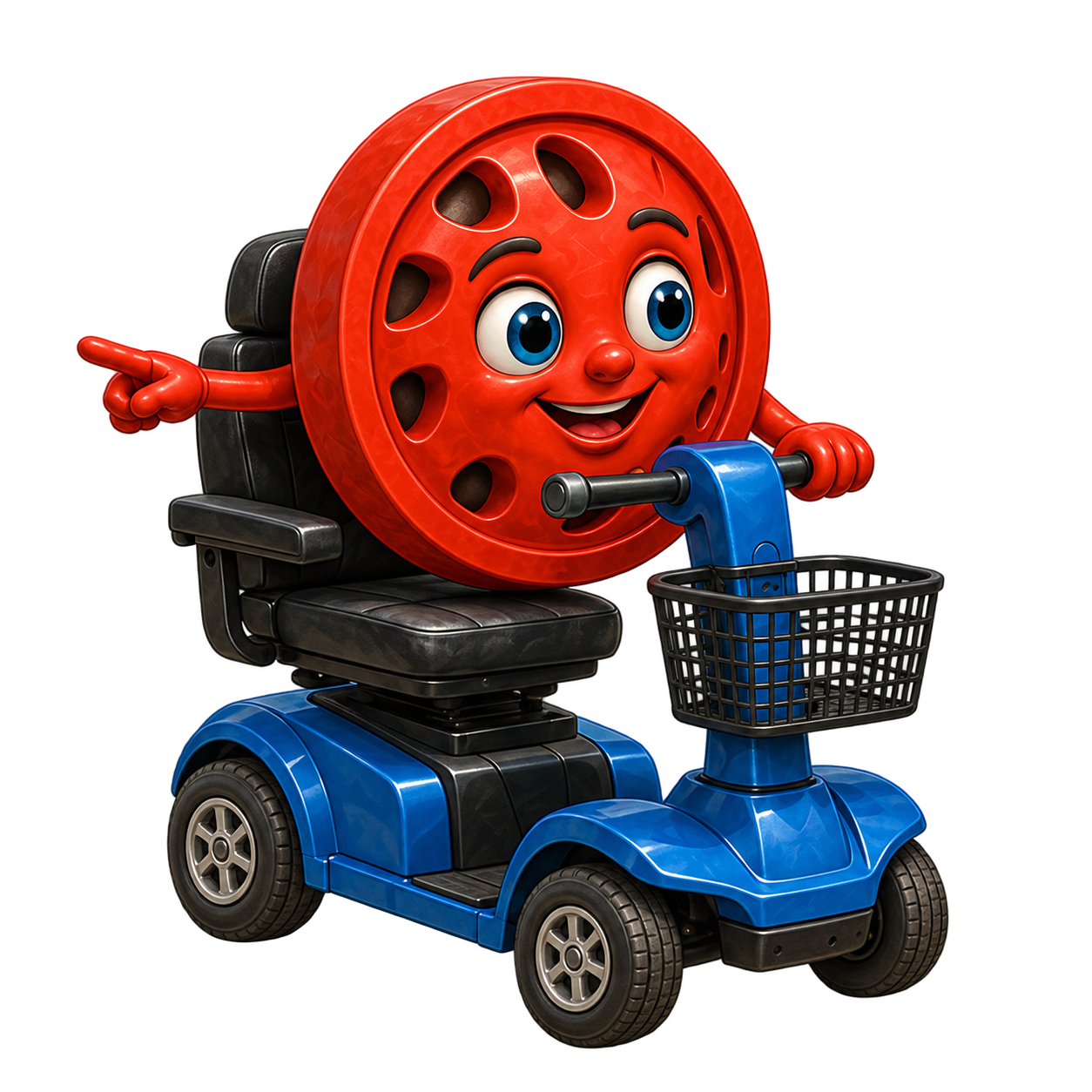
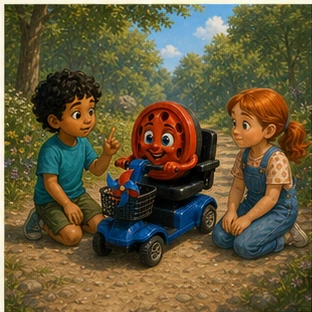
In Willy's story, friends can stay close, ask good questions, and act together without taking over. The most useful friend is not always the fastest fixer; sometimes it is the person who listens long enough to learn what works.
How does it feel when someone asks before touching something that belongs to you?