In children's books about friendship, a small moment can open a conversation: a friend helps without asking, someone wants to join a game, or two characters need different routes to the same place. A story lets you look at a situation without immediately asking a child to talk about their own experience.
Choose a story with wishes, difficulties and decisions. The conversation can grow from what happened in the plot, rather than ending with a general instruction to be a good friend.
Look for friendship in actions
In a picture book, look for actions you can point to: someone listens to an answer, waits, explains a need or changes an idea after hearing a friend. Children can notice these details in the words and pictures.
Ask what the friend did that helped. The answer may be very small. Sometimes asking before helping is the significant moment.
Friends do not have to want the same thing
Friendship does not require choosing the same color, enjoying the same game or doing everything in the same way. A story can show how a relationship continues when people have different requests.
Notice whether characters can say no, ask for a change or offer another idea. A conversation about boundaries can be concrete: if a character does not want their mobility scooter pushed, how could a friend respond?
Three questions after a read-aloud
First, ask what each character wanted. Next, choose a moment when someone listened or did not listen. Finally, ask what other idea might let everyone participate.
You do not need to ask all three questions in sequence. Choose one that fits a page the child remembers. A drawing or a pointing finger can be an answer. You can also invent another ending and explore what it changes.
Try one destination and two colors
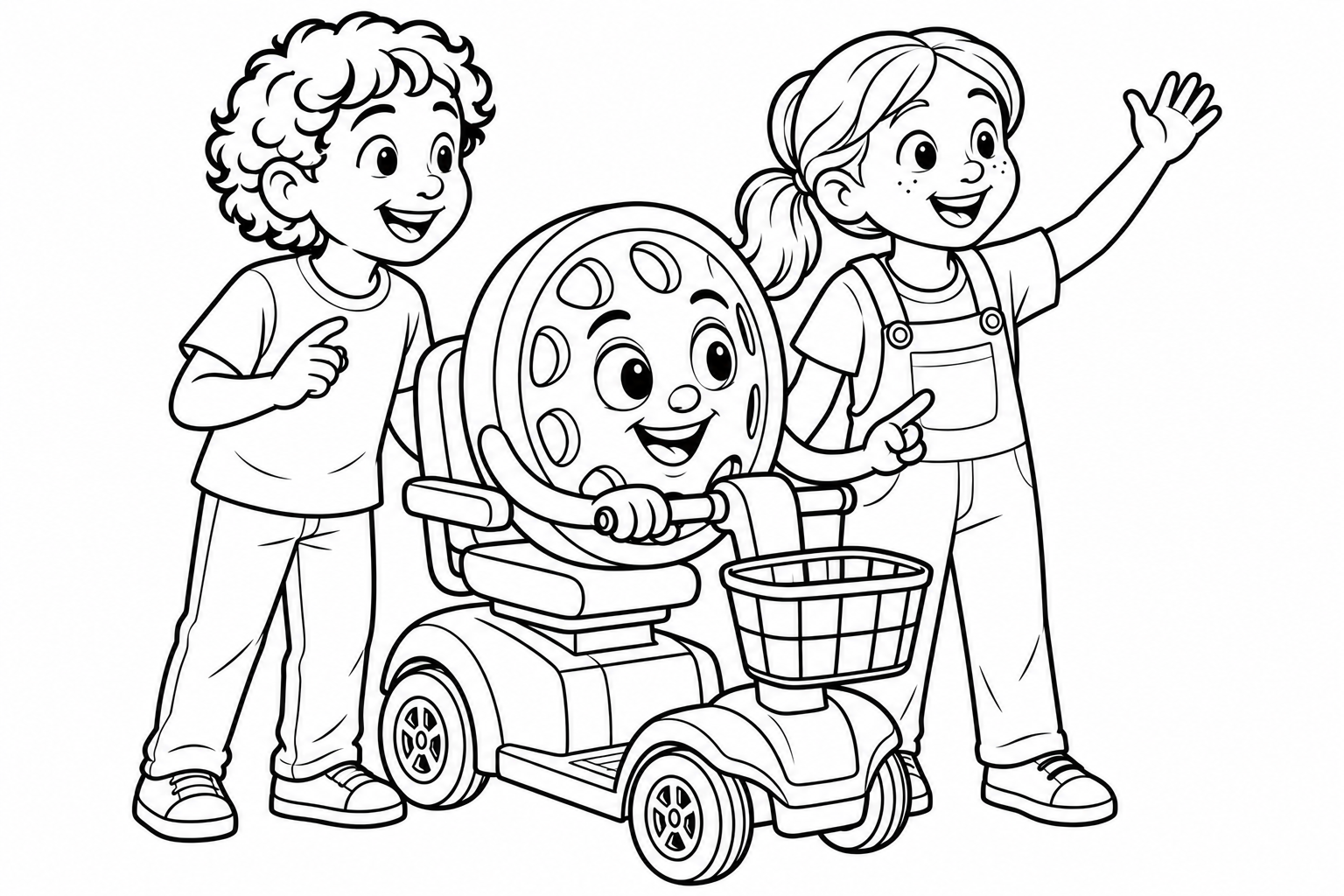
Draw a shared destination with two routes, or choose the coloring page of Willy and his friends. Each person chooses a color and an area. Ask before coloring an area someone else has chosen.
Then make one shared decision: what color should the destination be? If you disagree, divide the area, try a third color or leave it white. The finished picture does not need to look uniform to be something you made together.
Meet these ideas in Willy's story
In the current English book, Willy and his friends work toward a shared destination while responding to problems along the path. The choices invite readers to notice who has useful information, who offers an idea and who decides whether a solution works.
The series website provides a preview and edition details for Willy the Wheel and the Winding Path. This is an invitation to explore that book, not an independent ranking of all children's books about friendship.
Frequently asked questions
Must a friendship story end in complete agreement?
Not necessarily. Characters can find a way to take part together while keeping different wishes and choices.
How do we discuss friendship without lecturing?
Start with a specific action and an open question. Allow different answers without requiring a personal story from the child.
What can a friend do after someone says, 'No, thank you'?