A search for creative activities for kids can produce a long shopping list before anyone has started making anything. Another approach is to choose one material you already have and a short stretch of time you can share.
Pick just one idea below. Each has a small outcome, but the child can change direction, stop or return later. An adult prepares any cutting or tools that are not suitable for the child to use independently.
1. Make a coloring page your own
You need one drawing and some colors, or a computer with a coloring page open. Offer a choice of character and first color. Willy and his scooter can be colored with a click, without dragging a brush.
To continue on paper, print a blank page and add a place to visit, a name for the path or a new friend around the drawing. A child can describe those additions aloud instead of drawing them.
2. Draw a cooperative path game
Use paper, markers and two small objects as playing pieces. Draw a starting point, a destination and several stops. Give each stop a short question or action, such as choosing a color, naming the place or inviting a friend to join.
Instead of racing, help the pieces reach the destination together. The child decides when a new route is needed. Someone who does not want to draw can choose the stops or tell an adult what to add.
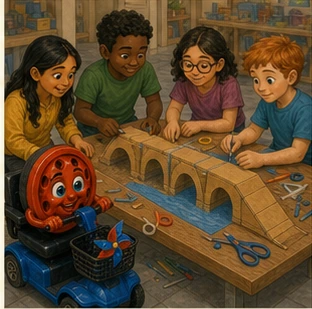
3. Build a cardboard bridge for a toy
Place a piece of cardboard between two low supports and gently test whether a small toy can cross. If the cardboard bends, fold or reinforce it and compare the result.
This is a toy model, never a bridge for a child to stand on. The interesting part is trying again: what changed, and what happened? The full bridge activity adds ways to explore teamwork and access.
4. Tell a story in three pictures
Fold a sheet into three panels. In the first, a character wants something. In the second, something changes the plan. In the third, the character chooses what to do. Draw, glue paper shapes or dictate the story to an adult.
A long plot is not necessary. Start with a prompt: Willy wants to meet his friends, what does he see on the way? The child is inventing a new story, so there is no single answer that must match the book.
5. Make signs for the play space
With an adult, prepare a few cards and add symbols for an entrance, a resting place, a clear route or a turn. Place them around the toy path and see whether another person can understand them.
If a sign is confusing, change the symbol and try again. Information can help a friend choose and take part, as well as decorate the page. Save a few signs for the next game.
Frequently asked questions
How long does a creative activity at home need to take?
You can begin with ten to fifteen minutes and adapt to the child's interest and the time available. A finished product is optional.
What if a child does not want to draw?
They can choose colors, dictate a story, move a toy, point to an idea or watch.
What would you change to make this activity your own?