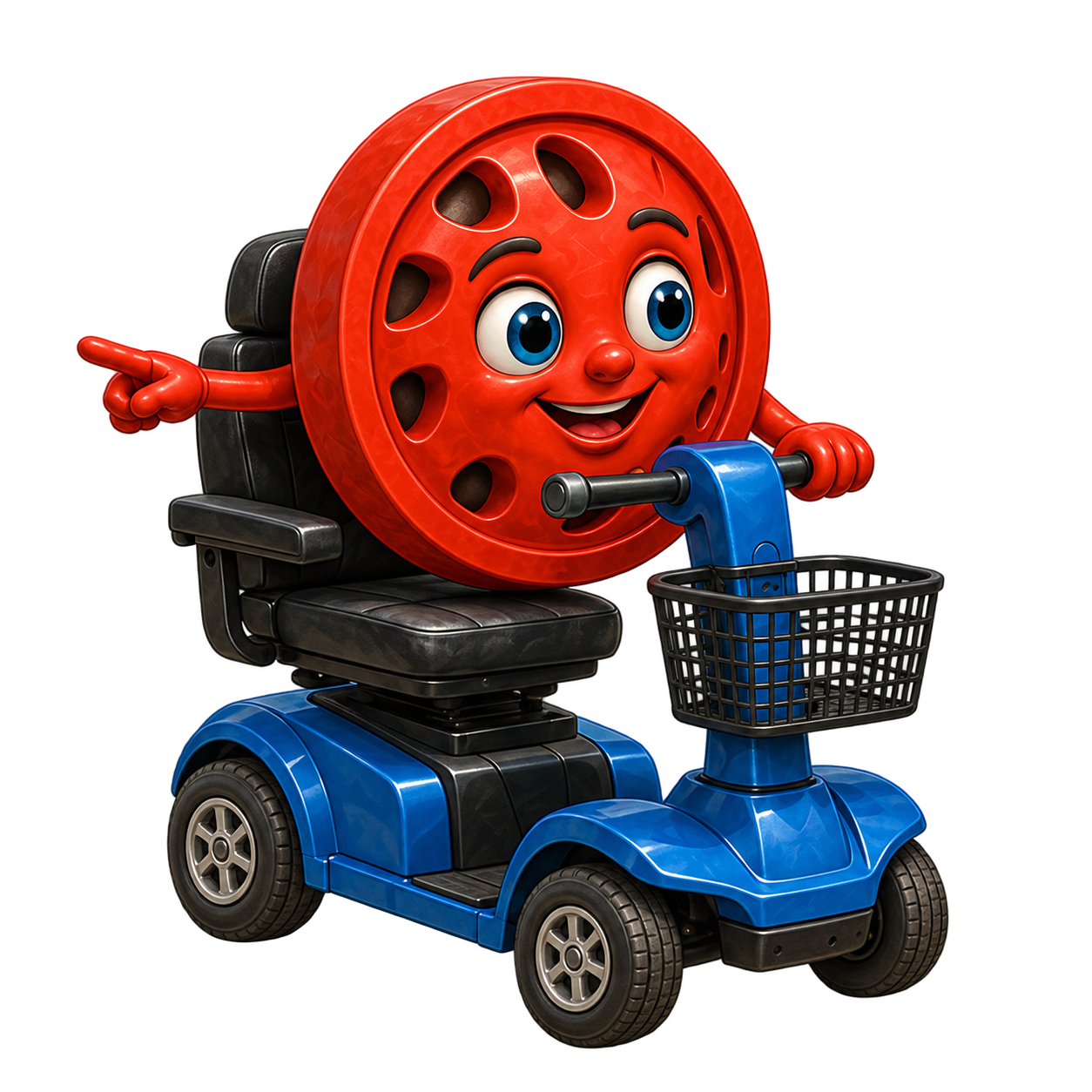
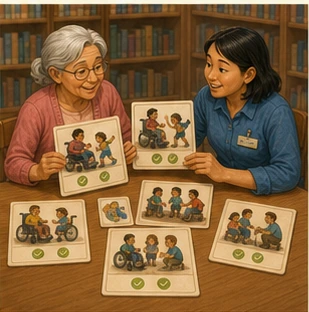
Every adventure starts with something we want to do. Before offering a solution, give the child room to name a goal, offer an idea and choose a step. These questions and activities connect Willy’s active role in his adventure with the small decisions children make in everyday life.
A cover may promise an inspiring story while the disabled character exists mainly to make everyone else grateful. Respectful representation does something quieter and more powerful: it gives the character a goal, preferences, humor, relationships, and the right to influence what happens.
A book does not need to explain a diagnosis to matter. Sometimes the strongest representation is an adventure in which a mobility device is ordinary and the character's curiosity drives the plot.
Who owns the goal?
Look for a desire beyond “being normal” or “overcoming disability.” Does the character want to join a festival, solve a route, make a friend, build something, or get home before rain?
Notice who speaks. If adults describe the child while the child remains silent, the story may reproduce the very exclusion it hopes to challenge.
What changes at the end?
Be cautious when the body changes magically, the child succeeds only by refusing support, or the community applauds ordinary participation as heroic. A respectful ending may simply repair a path, improve information, or let everyone reach the shared activity.
Help should be offered and directed, not imposed. Mobility aids should not become toys, burdens, or visual shorthand for sadness.
Try three readers
Imagine the book in the hands of a disabled child, a nondisabled classmate, and an adult leading discussion. Will the first see a whole person, the second learn companionship rather than pity, and the third find a concrete action?
Willy's story places the barrier in the route and the knowledge with the person using it. That is the standard every related article on this blog follows.
Frequently asked questions
What makes disability representation in a children's book respectful?
The disabled character has a real goal, voice, choices and relationships. Help is offered with consent, and the ending does not depend on a cure or on praising ordinary participation as heroic.
Should a children's book explain a diagnosis?
Not necessarily. Accurate information can be useful, but a diagnosis is not required for a story to show disability naturally and respectfully.
How is this guide different from a list of disability books?
This page provides evaluation criteria you can apply to any title. The inclusive shelf guide explains how to balance a larger collection for ages 4 to 8.
What does this character love, notice, or choose beyond the book's lesson?