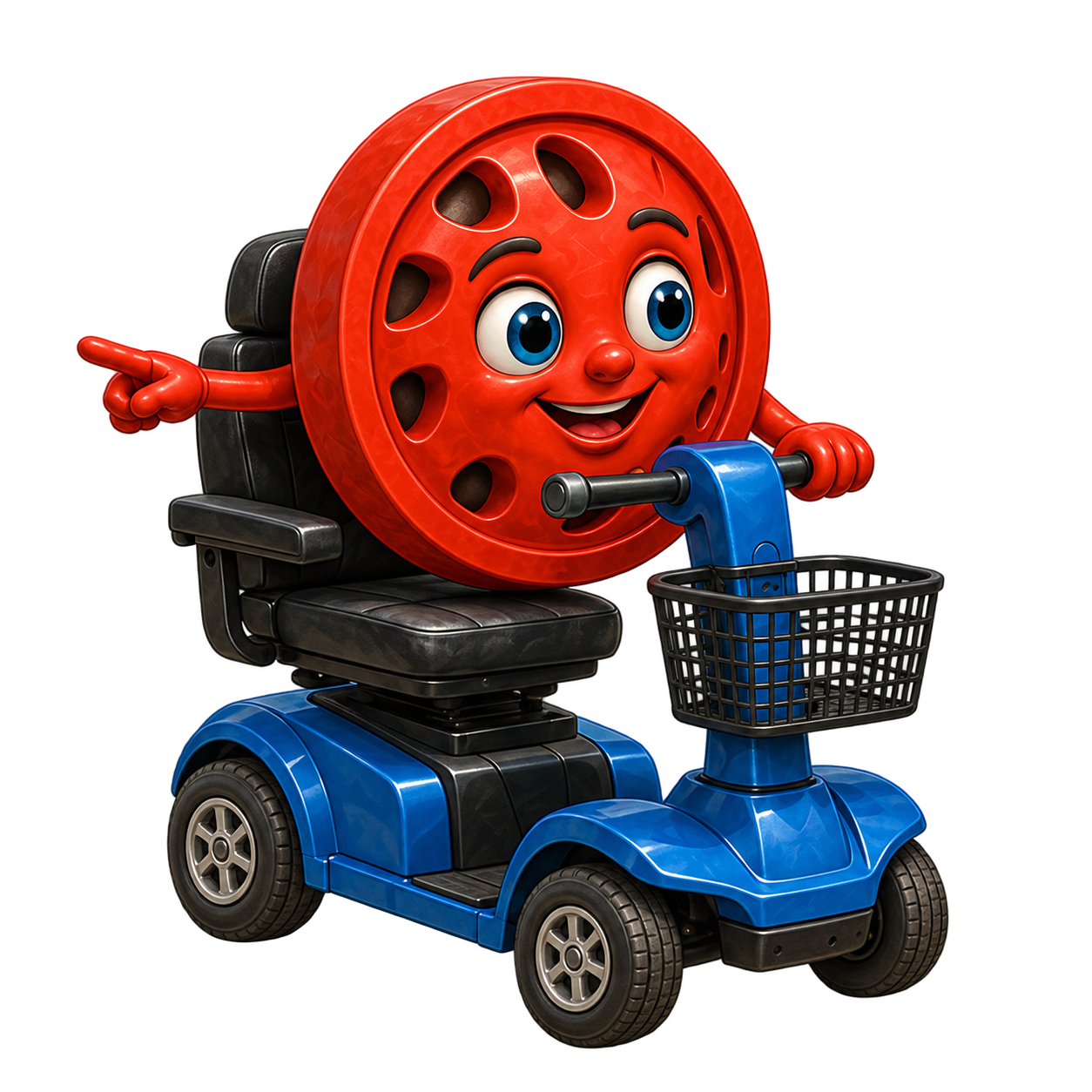
Every adventure starts with something we want to do. Before offering a solution, give the child room to name a goal, offer an idea and choose a step. These questions and activities connect Willy’s active role in his adventure with the small decisions children make in everyday life.
A cardboard bridge can teach more than balance and strength. It invites a deeper design question: who will use this, and how will we know the solution works for them?
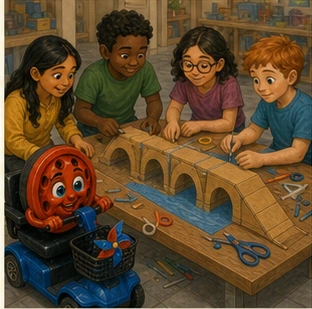
Build for a wheeled toy, small cart, or ball. Children do not need to simulate a person's disability. The object gives clear feedback about width, slope, stability, and edges while the group practices listening and revision.
Write requirements first
Agree that the bridge must be wider than the object, firm under its weight, gentle enough to enter, and protected at the edges. Draw the four requirements before anyone begins decorating.
Offer cardboard, tubes, blocks, craft sticks, and tape. An adult handles difficult cutting while children own the design choices.
Treat the first test as data
Move the object slowly. If the bridge wobbles, catches a wheel, or creates a steep drop, stop. Do not hold the object in place to prove the design works.
Describe what happened without judging the builder: “The board moved” rather than “You made it wrong.” Change one feature and test again.
Ask who holds expertise
The person using a design often notices details the builder cannot see. In real access planning, that user knowledge is not an optional opinion; it is essential evidence.
Celebrate revision, not heroic rescue. The bridge succeeds when the user can cross with safety and control, not when friends carry the user over a design that failed.
What did the user test reveal that the builders could not see?