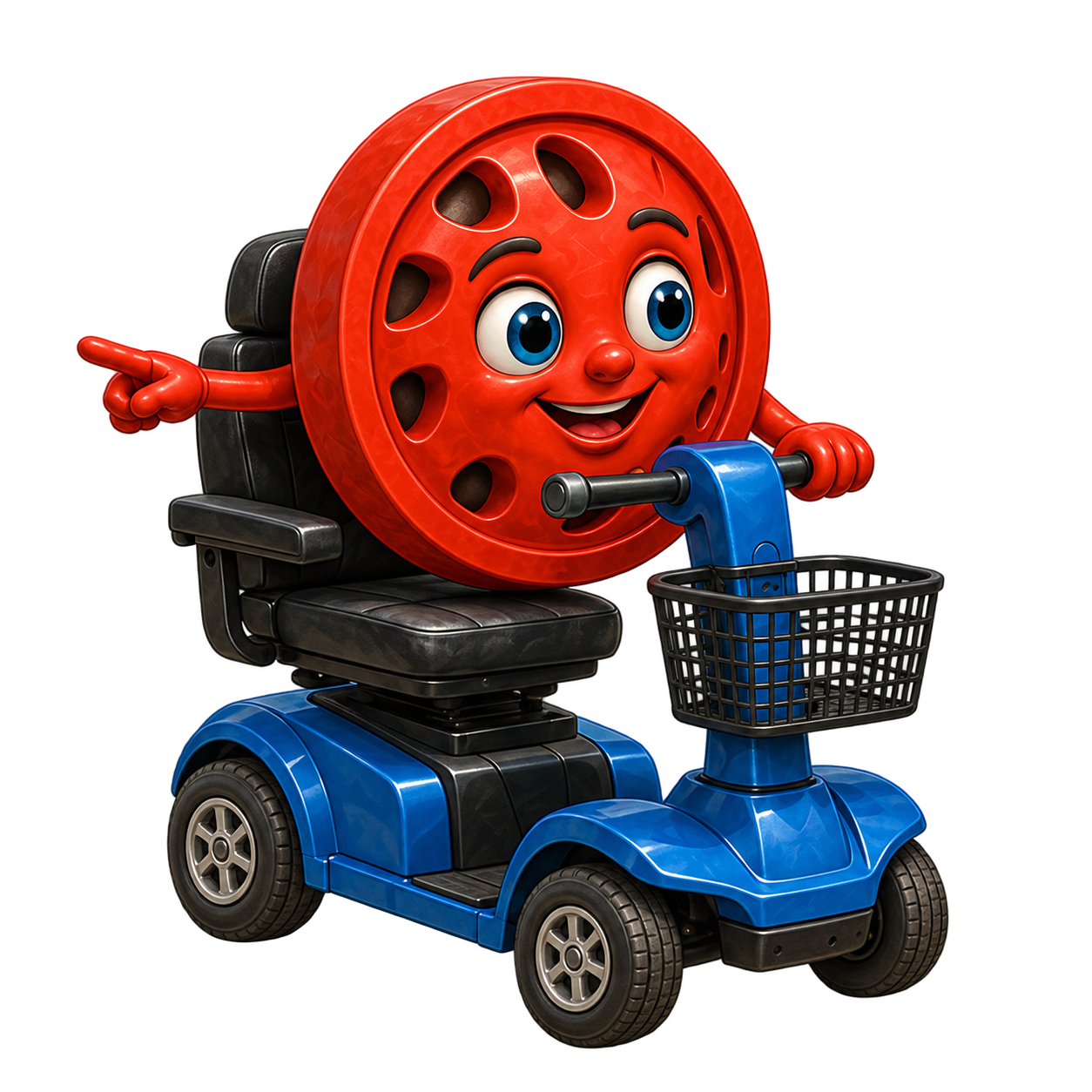
Every adventure starts with something we want to do. Before offering a solution, give the child room to name a goal, offer an idea and choose a step. These questions and activities connect Willy’s active role in his adventure with the small decisions children make in everyday life.
Young children often understand fairness as everyone receiving the same thing. That idea becomes confusing when one classmate uses a different tool, needs more time, or joins the activity through another route.
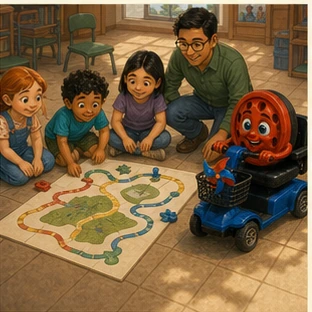
This cooperative game gives the group a more useful picture: the destination can be shared even when the routes, supports, and pace are different. It does not ask children to pretend to have a disability.
Build three routes
Use tape or paper to create a narrow shortcut, a wide curving route, and a route with clear stopping points. Place a picnic picture, puzzle, or class message at the destination.
Give each small group a task condition, not a disability simulation: carry a tray steadily, move as a pair, keep space for a wheeled toy, or pause at every symbol.
Choose with information
Before moving, each group names what its route must provide. Width, time, a partner, or a clear sign might matter more than shortest distance. Children decide after listening to everyone who will use the route.
Run a second round after changing one condition. The group learns that a route is not universally good or bad; it works in relation to real people and tasks.
Name the social skill
Cooperation is not only sharing materials. It includes stating a need, asking for information, changing a plan, and measuring success by who took part rather than who arrived first.
Connect the activity to daily routines. Is there one line, station, seat, or instruction format that quietly leaves someone watching? Which route could the class redesign together?
How can we tell whether a route works for the whole group?