A child may have an answer in mind and still need someone to read the question. When an activity relies entirely on independent reading, it can be difficult to separate understanding the idea from decoding the words. Spoken questions offer another way into the same activity.
With Willy, a picture, a short question and feedback can become a shared conversation. The adult’s role is to make the task clear, allow thinking time and show interest in the child’s reason. There is no need to rush toward the next star.
Hear the question before making a choice
Starting Willy’s game also starts the first question. After a correct answer, the feedback finishes and the next question plays. A “Hear the question again” button sits beside the text for a child who wants another listen.
Stay nearby for the first round to see whether the child understands what to do. You might say, “Let’s listen to the whole question, then you can choose.” If the written choices are difficult, read both without emphasizing the correct one.
Ask one follow up question
After a choice, try “What helped you decide?” or “Where did you see that in the picture?” Accept a short answer. If the child says “the path,” you can respond, “You noticed the path. What would you check about it?” That is enough for one turn.
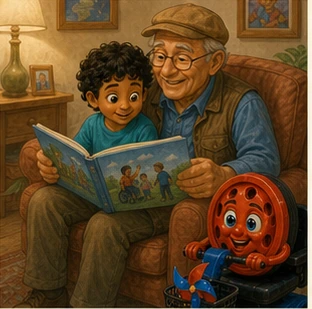
While reading Willy the Wheel and the Winding Path, return to what Willy wants and how the friends can reach their shared celebration. Let the illustration support the discussion. An unexpected answer may reveal an interesting detail that an adult overlooked.
Let feedback open another attempt
When a choice does not fit, allow the explanation to finish. Instead of immediately pointing to the other button, ask what Willy needs the friends to consider. Hear the question again or look together for two clues. The child can then make another choice.
After success, a brief “What if they had not asked him?” can extend the idea. A reply might be a sentence, a drawing or a short pretend conversation about asking permission. Keep Willy’s own preferences part of the discussion.
Continue with something the child chooses
After a scene, offer a coloring page, a return to the book or a break. A child might choose Willy and his family, describe what is happening in the picture and ask an adult to write one sentence about the artwork. Print it and read the sentence together another day.
Spoken quest questions are part of the game. The coloring pages offer color selection, saving and printing; do not assume every word in every part of the site has narration. An adult can read a heading or share the picture book in their own voice as needed.
What supports the shared reading approach?
IES guidance for reading with young children recommends conversation during reading and activities connected to the book’s focus. These Willy suggestions apply that approach to a particular story and game. The guidance does not evaluate our site, and an audio recording by itself is not a substitute for responsive conversation.
Choose a comfortable moment and leave space for the child’s own question. Returning to a familiar scene is welcome. Familiarity can make it easier to notice a new detail or explain a different idea, without needing to finish a longer session.
Frequently asked questions
Do children have to press a speaker for each question?
No. Start plays the first question, and the following questions play after correct answer feedback. Replay remains available whenever another listen would help.
What if the voice does not start?
The game shows a message and a replay option if playback fails. Check the device’s volume too. The written question stays available for shared reading.
Have we left room for the child’s idea, as well as their click?