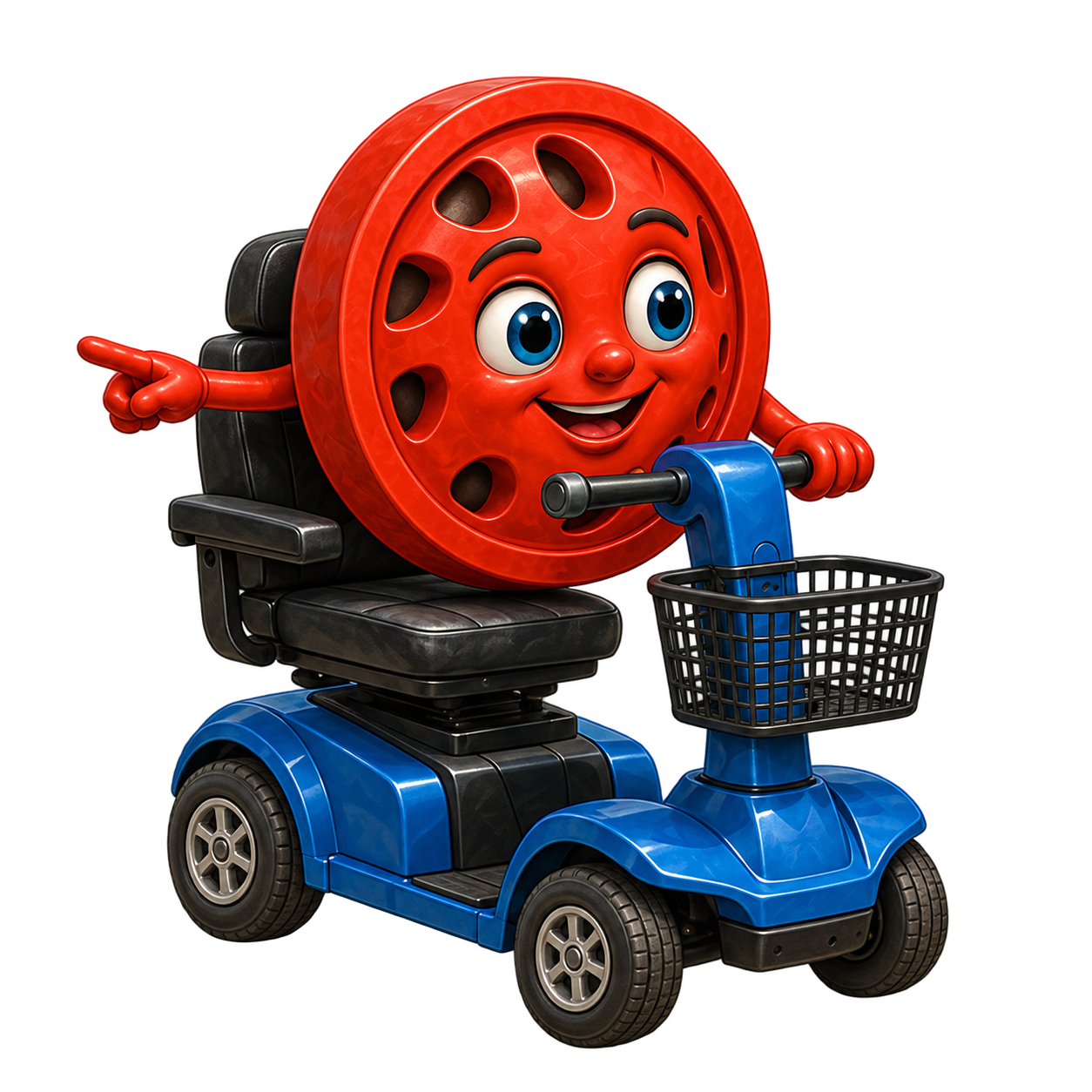
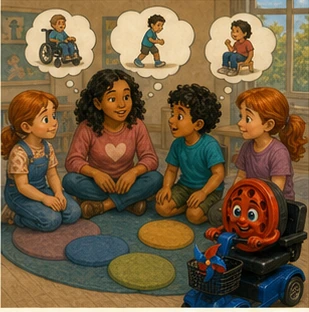
Every adventure starts with something we want to do. Before offering a solution, give the child room to name a goal, offer an idea and choose a step. These questions and activities connect Willy’s active role in his adventure with the small decisions children make in everyday life.
Children notice bodies and tools. When an adult shushes every question, they may learn that disability is embarrassing. When an adult explains a stranger's medical history, they learn that disabled people's privacy is public property.
There is a middle route: answer the question that was asked, use accurate ordinary words, and remind the group that the person decides what personal information to share.
A simple definition for ages 4 to 8 is: “A disability is a body, mind or sense working in a way that can make some activities harder or different. Tools, support and accessible places can help people participate.”
Start with a simple definition
For a younger child, try: “People's bodies and minds work in different ways. Some people use tools or need places designed differently.” For an older child, add that disability can be visible or invisible.
“That is a mobility scooter. It helps Willy travel farther.” “The entrance has steps, so this route does not work for him.” These examples are concrete and do not guess a diagnosis.
If you do not know, say so. “People use this tool for different reasons” is both truthful and respectful.
Protect the person, not adult comfort
Redirect invasive questions: “That is personal information Willy could choose to share. We can talk about how the scooter works in the story.”
Speak to a disabled child directly rather than asking a companion to answer. Never invite a child to represent every disabled person.
Answer the question, then return to relationship
Ask what Willy enjoys, what he notices, and which idea he contributes. Children need permission to see difference and equally strong permission to see ordinary friendship.
Close with a practical norm: ask before helping, listen to the answer, and do not touch mobility equipment without permission.
Frequently asked questions
What is a simple way to explain disability to a child?
Say that bodies, minds and senses work in different ways, and that a disability can make some activities harder or different. Tools, support and accessible places can help people participate.
What should I say when a child asks why someone uses a wheelchair?
Answer what is visible without guessing private information: “The wheelchair helps that person move. People use wheelchairs for different reasons.”
Should I stop a child from asking about disability?
Do not shame ordinary curiosity. Help the child use respectful words, protect the other person's privacy and avoid asking a stranger to explain personal medical information.
What words should adults avoid?
Avoid pity, miracle-cure language and phrases such as confined to a wheelchair. Do not describe a person's diagnosis unless they have chosen to share it.
Which answer gives useful information without telling someone else's private story?