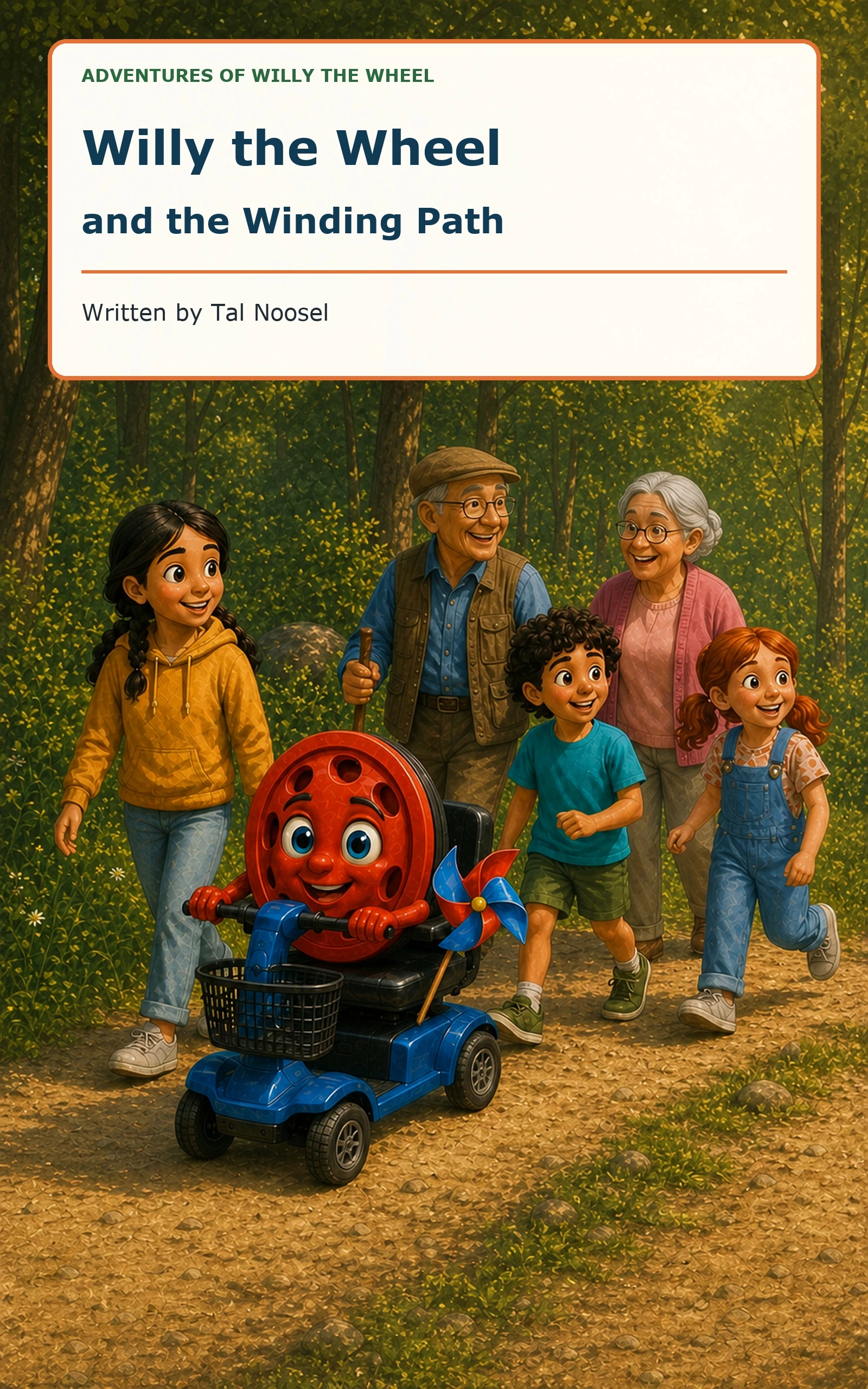
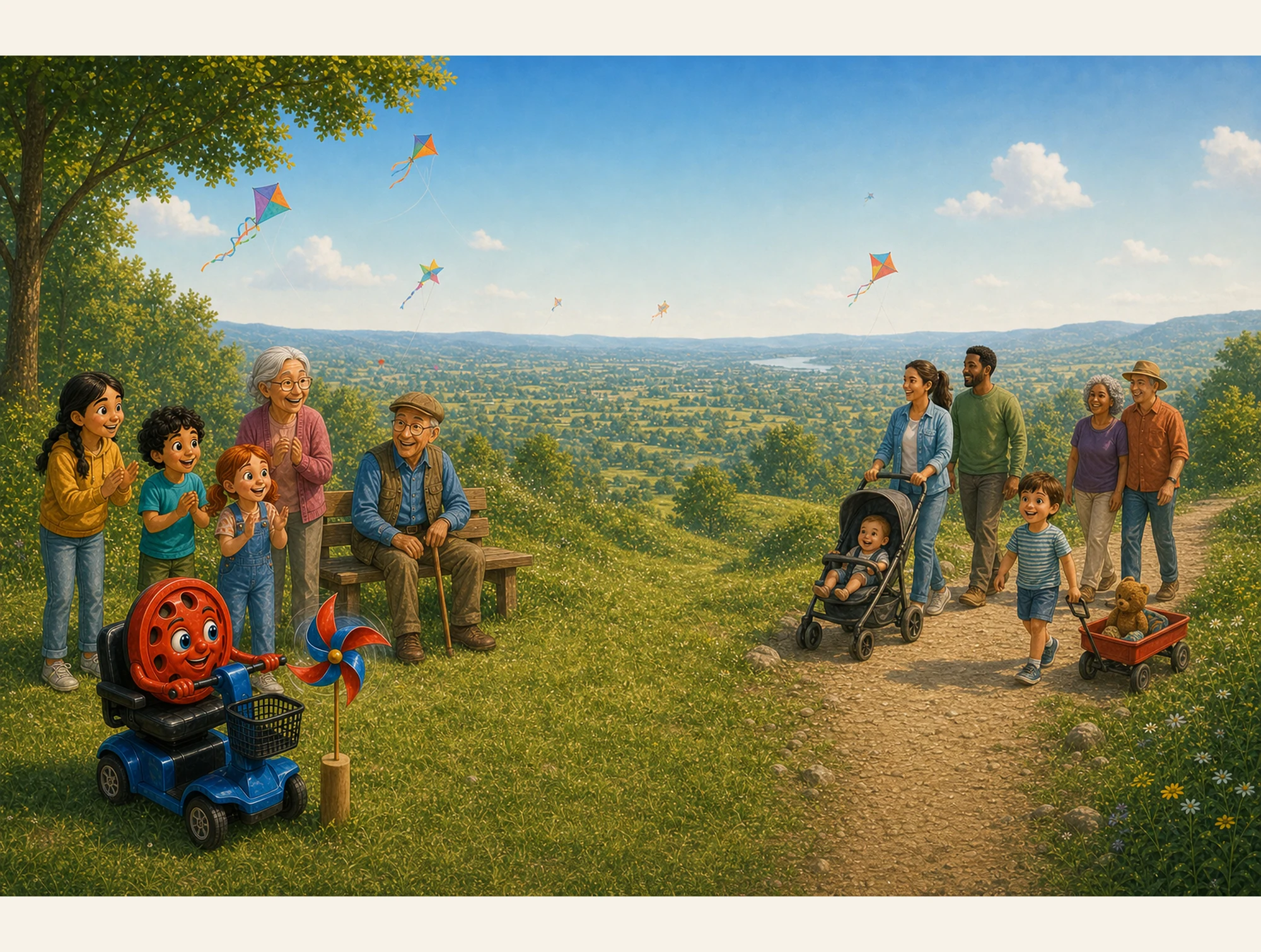
Written by an author with cerebral palsy · Ages 4–8Meet the two books

Meet Little Wheel · Book one · Ages 4–8

A little wheel. One impossible step. A new way across.

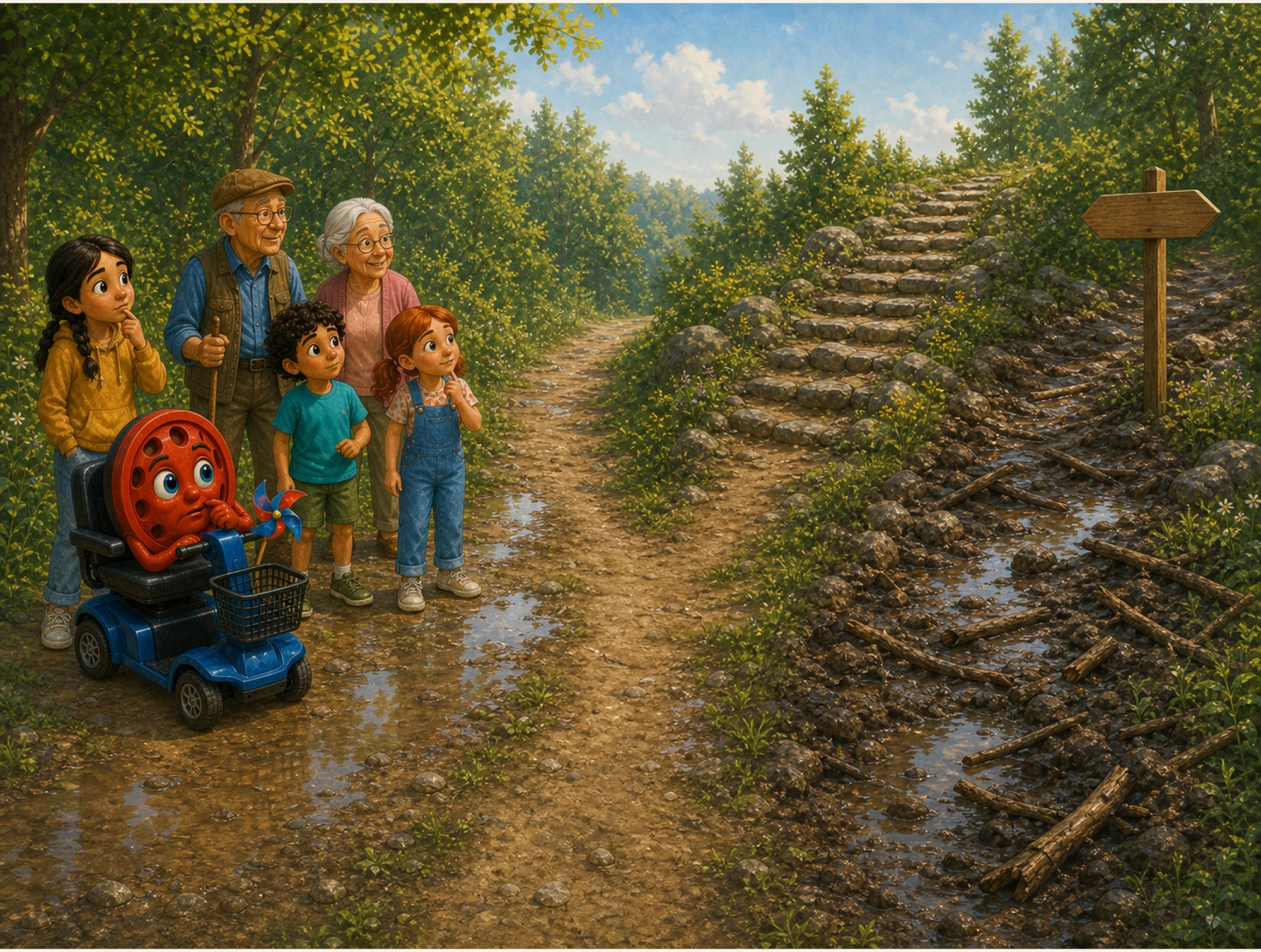
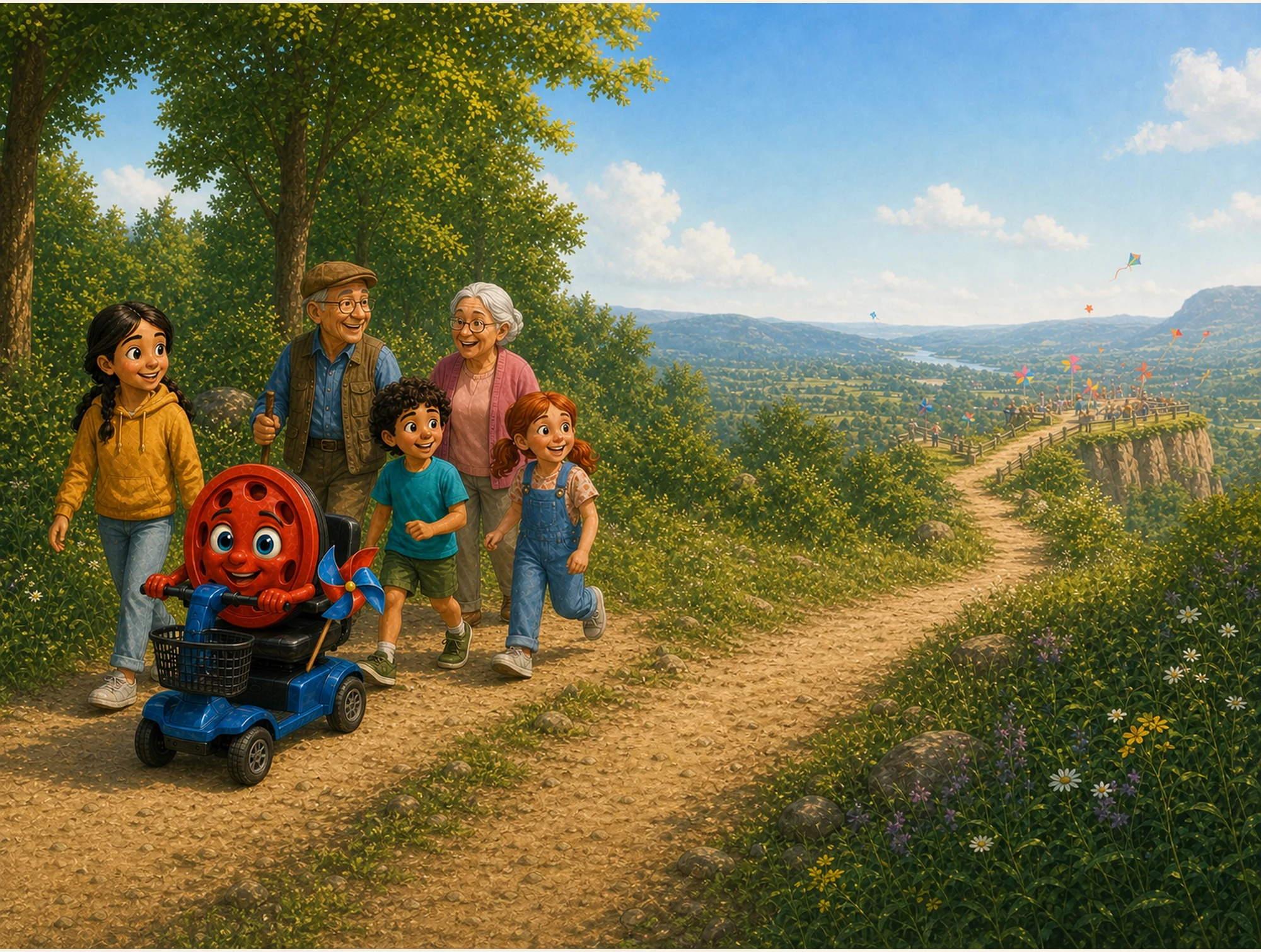
Little Wheel wants to cross the old bridge with Lily and his friends. One high step blocks the way, and pushing harder does not work. Together, they build a sturdy ramp that opens the bridge for everyone.

Cover of The Little Wheel Who Could by Tal Noosel, showing friends building an accessible ramp
Book oneAges 4–8

A blocked bridge. A group of friends. One practical idea that changes who can cross.

Tal Noosel was born with cerebral palsy. He wrote the story he needed as a child: your body can change the route without taking away the future.

Reading order: Book oneHe is Little WheelBook twoHe becomes WillyStart here
Who?Little Wheel, Lily and their friends
What stops them?One high step on an old bridge
What changes?They build a ramp that opens the way

Who this book is for

For a child finding a way that fits—and the grown-up beside them.

For the child watching everyone else

“Will I always be the one who can't keep up?”

Willy does not tell a child to smile, try harder or pretend it does not hurt. He stays beside the question and helps the child discover: I do not have to move like everyone else for my way to matter.

For the parent thinking years ahead

“Will the world make room for them when I am not there?”

Tal cannot promise that every barrier will disappear. His life offers something a parent or grandparent can believe: the future may look different from the one you pictured and still hold love, purpose, laughter and choices that truly belong to the child.

What Willy tells a child

The hurt is real. It does not get the final word about who you become.

Willy never promises that everyone can do everything in the same way. He gives a child a quieter, stronger kind of hope: there is more than one good way to learn, move, belong, choose and grow.

01

Name what is hard

You are allowed to say, "This road does not work for me."

02

Build support around you

People, access, technology and new ideas are part of courage.

03

Keep your choices

Your path can be different and still be yours to shape.

Two stories. One honest promise.

Your way does not have to look like everyone else's.

Here is what actually happens in each book.

Cover of The Little Wheel Who Could by Tal Noosel
Read first

The Little Wheel Who Could

Little Wheel believes he is too small. When a high step blocks an old bridge, pushing harder is not enough. With Lily, his animal friends and the townspeople, he helps build a sturdy ramp - a small change that opens the way for everyone.

"Maybe I don't need to be big. I just need to be me."
Kindle $3.99 · Paperback price shown on Amazon

For parents and educators

For the moment when love is not enough to answer the question.

You may want to say, “It will all be okay,” while knowing you cannot promise that. Willy gives you something honest to say instead: I see what hurts. You are not broken. We will find what helps, and your way will still count.

Read the conversation guide
SayI can see that this is hard.
NoticeYou do not have to do it exactly the same way.
ChooseWhat would help you take the next step?
Tal Noosel, author of Willy the Wheel, using his mobility device at a public event

“Your future still belongs to you.”

About the Author

Tal wrote the answer he had waited most of his life to hear.

Born with cerebral palsy, Tal knew the distance between wanting to move like everyone else and living in a body that moved differently. His turning point was not becoming "normal." It was learning to combine people, knowledge, accessibility and technology to build a life that worked for him.

Willy exists so a child does not have to wait decades to hear this: your body may change the route, but it does not take away your right to dream, decide, love and belong.

Read Tal's story Media & speaking

A story to place in a child's hands

Perhaps you needed this book when you were small, too.

Many grown-ups learned to hide the part of themselves that could not keep up, fit in or follow the expected road. Reading Willy with a child can open a different conversation—one in which nobody has to become someone else before their life is allowed to count.

“We cannot choose every road a child will meet. We can help shape the voice they carry into it.”For parents, grandparents and every grown-up who stays beside the child

Willy's world keeps moving

A new place. A new question. Never the same picture twice.

These adventures keep Willy present in the real world without replacing the reason he exists.

Willy the Wheel discovering Paris beside the Eiffel Tower
Paris, France

What can you notice when the road feels too big?

Willy the Wheel exploring the Great Wall of China at sunrise
The Great Wall, China

You do not need to see the whole road to choose the next step.

Willy the Wheel sketching beside the Taj Mahal in India
The Taj Mahal, India

What would your own way look like if you could draw it?

For young viewers

Meet Willy in motion.

A short, playful introduction gives children a quick way into Willy's color, curiosity and world before reading together.

Willy the Wheel smiling on a colorful winding pathWatch: Meet Willy the WheelOpens on YouTube

Begin the story together

Start with book one.

The Little Wheel Who Could · Ages 4–8. A blocked bridge, a group of friends and one ramp that opens the way for everyone.

Kindle · $3.99 Paperback price is shown on Amazon and may vary by location.

Read the synopsis and sample first →
Cover of The Little Wheel Who Could by Tal Noosel

Keep the conversation going

Stories, questions and new paths between the books.

Follow only where it helps your family: short stories on YouTube and conversations for grown-ups on Facebook.