A puzzle, a building project or a new game can bring out “It’s hard.” An adventure story can give a family another way into that conversation: what does the hero want, what do they try and what could change along the way? Begin by making room for the child’s own wishes and choices.
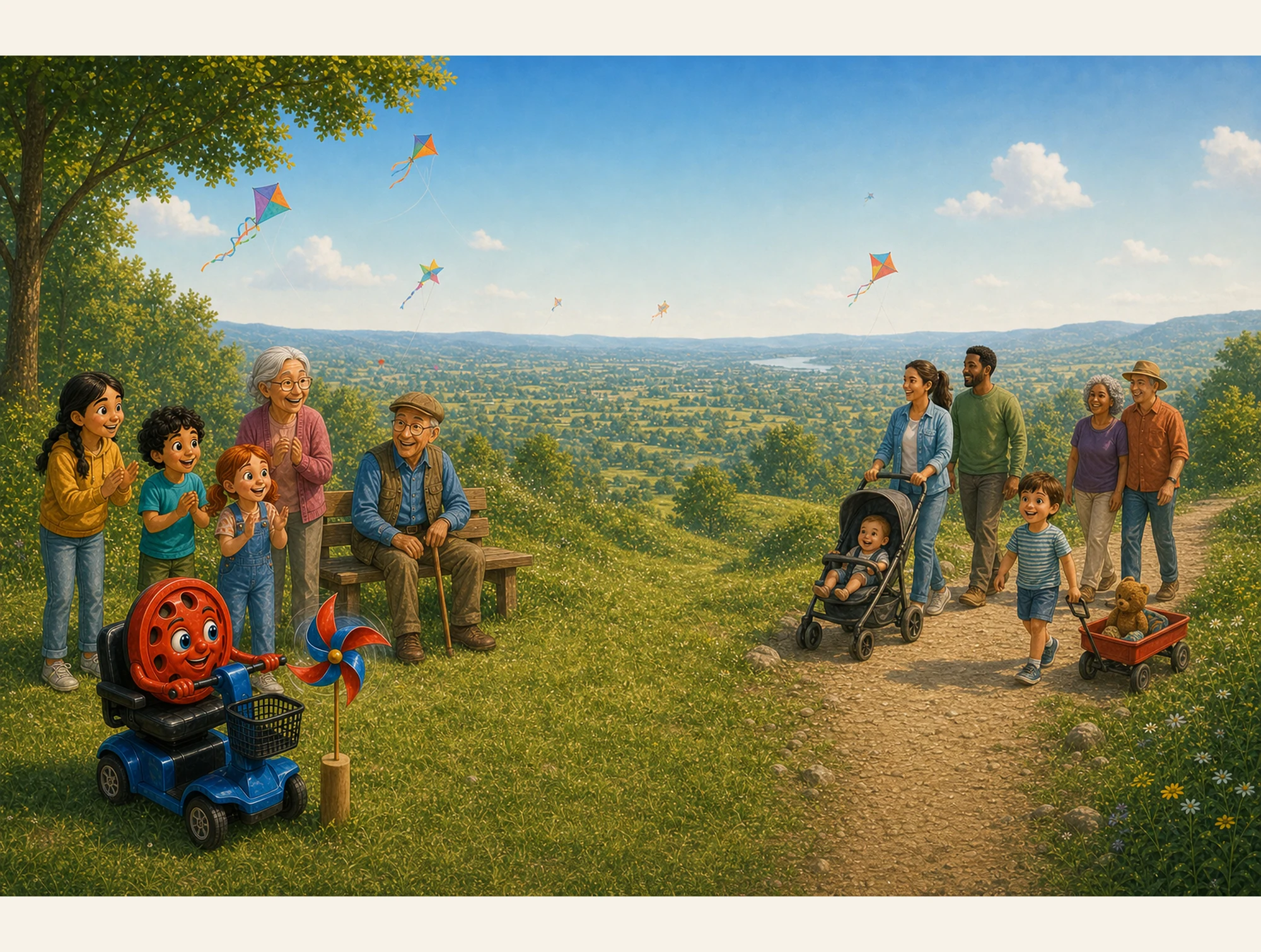
Willy is a hero with big plans. He travels on a blue mobility scooter, sets off with friends and takes part in finding a way forward. Children meet a character who thinks, acts and decides. You can draw an idea from the adventure without asking a child to be exactly like the hero.
Begin with what the hero wants
Before discussing a difficulty, ask where Willy wants to go and what excites him about the festival. Wanting to play, explore or be with friends offers a familiar connection. The goal gives a reason to think about the route.
Continue with an open question about something the child would like to try. Their answer may be a small, familiar activity. The story invites thought; it does not require an ambitious goal chosen by the adult.
Courage can look like a small step
A child might add one block, answer a spoken question or color a single detail. Describe that action: they tried a new color or checked whether a piece fitted. The encouragement connects to a choice they can recognize.
Courage does not require continuing when an activity feels overwhelming. Another try, support or a pause are possible choices. Let the child explain what they feel and what they want to do next.
Look for another route
Willy and his friends investigate and test ideas when their path changes. After reading, draw two routes or suggest two ways to build a crossing. The child can choose an approach and look at the result.
If it does not work, ask what they would like to change. Not every difficult moment needs a lesson. Sometimes listening, holding a page steady or returning to the story another day is enough.
Share the child’s decisions with family
The coloring pages let children choose colors, fill regions with a click and print their artwork. Invite them to explain what they chose and, if they want, show it to the family. Their account matters more than matching the original colors.
Ask before sharing a picture or creation with relatives. Add a short sentence about the idea behind it if the child wants one. Leave room for them to choose what to display and what to keep for themselves.
Give an adventure and time to listen
For a birthday, holiday or ordinary visit, grandparents can pair a picture book with time to read and play. A note such as “We can’t wait to hear your ideas” makes the invitation personal and carries it beyond opening the gift.
The book does not guarantee success in every task or a measured change in confidence. It offers a hero and a world to return to. Adapt the questions to the child, keep the activity playful and stay curious about ideas you did not expect.
Frequently asked questions
What ages are these ideas for?
The book and activities are intended for ages 4-8. Adapt the question, support and session length to the child.
Does the activity guarantee improved skills?
These are opportunities for play and practice with choices. Their effect on a particular skill has not been measured in a study.
Which step would you like to choose yourself?