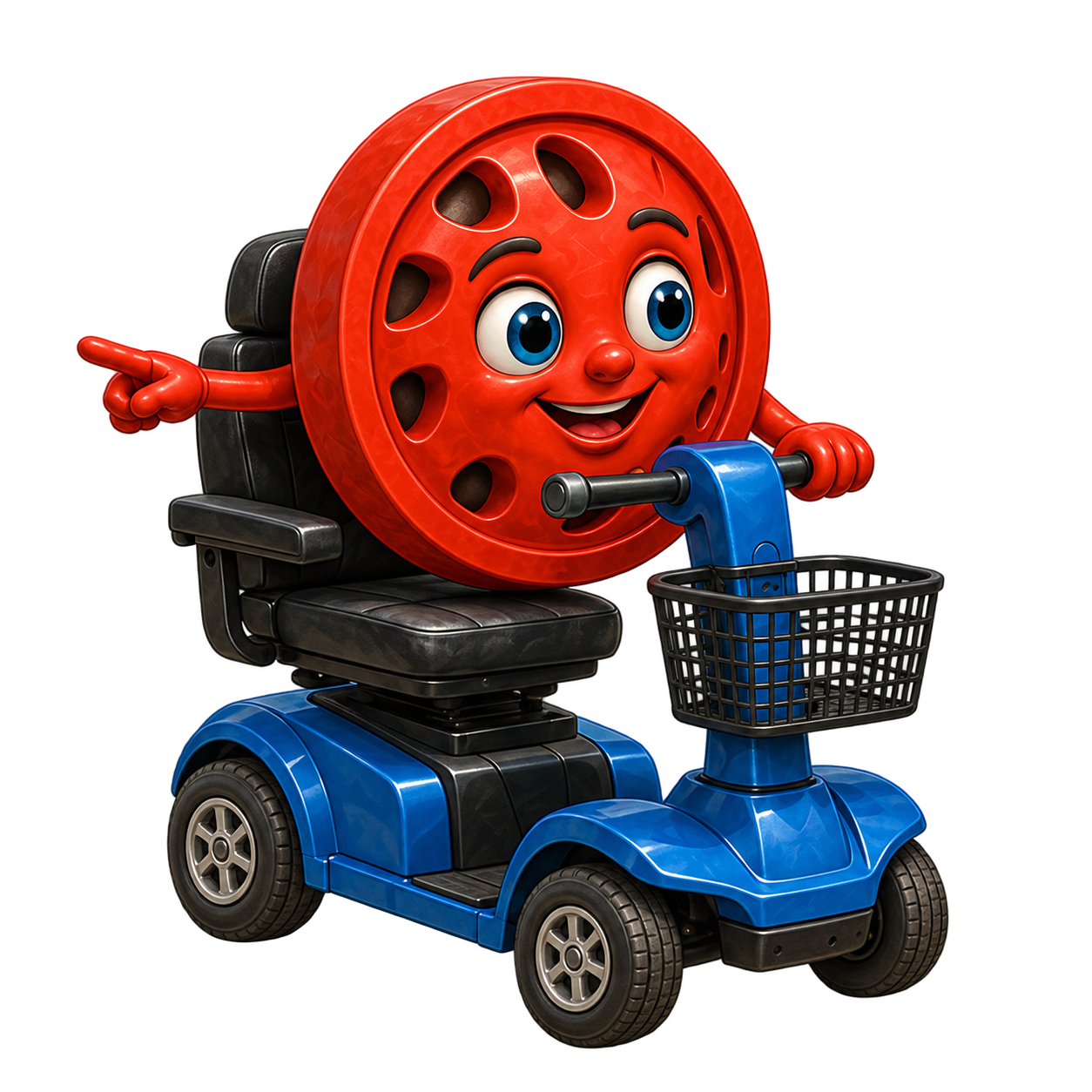
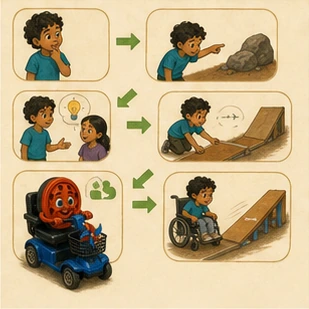
Picture books let children rehearse a difficult moment while everyone is safe on the carpet. The most useful stories do not solve the problem with one burst of kindness. They show noticing, conversation, attempts, mistakes, and a check led by the person who will use the solution.
The five-part routine, Stop, Name, Ask, Try, Check, can move from storytime into block play, playground conflict, and family plans.
Stop and name
Stopping keeps urgency from turning into takeover. Name the observable barrier: the path is muddy, the turn is narrow, the instructions are only spoken, or the table cannot be reached.
Do not name the person as the problem. “Willy can't” closes the design space. “This route has a step” points toward action.
Ask and try
Ask the person affected what they need and invite ideas from the group. A good requirement may be more useful than ten random solutions: firm surface, enough turning room, a gentle slope, or clear visual directions.
Choose one idea and try it at a safe scale. Children learn that selecting an experiment is different from declaring the problem finished.
Check with the user
The user tests the solution and can say no, not yet, or change this part. Checking is not a ceremonial thumbs-up; it is where the design becomes accountable.
Return to the book's pictures and find each step. Then ask where the class could use the same routine this week.
Which step keeps a good intention from becoming an unhelpful solution?